
Media
Bringing science to public
Educational videos
From inhaled fungal spores to diagnosis using blood and urine
What happens when Aspergillus fumigatus spores reach the lungs of an immunocompromised patient? This short animation illustrates spore germination, the host immune response, and the release of molecular biomarkers that can be detected in clinical samples.
Our research team at the Laboratory of Molecular Structure Characterization, Institute of Microbiology, Czech Academy of Sciences (Prague), together with international clinical collaborators, has evaluated a non-invasive diagnostic approach combining three biomarkers: urinary triacetylfusarinine C (TafC), serum galactomannan (GM), and serum pentraxin-3 (PTX3).
In our study published in Clinical Microbiology and Infection (2026), the combined panel detected 83.8% of invasive aspergillosis cases, although including PTX3 substantially reduced specificity. Further clinical validation is required.
Publication: Patil et al., Clinical Microbiology and Infection (2026)
Media coverage:
- Česká televize – A new way to diagnose aspergillosis (15 November 2026)
- Novinky.cz – Czech scientists report advances in diagnosing fungal infections (22 October 2026)
- zezdravotnictvi.cz – New method can detect dangerous fungal infection from blood and urine. It should help patients with weakened immune systems (21 October 2026)
- Czech Radio / iROZHLAS – Blood and urine tests for diagnosing fungal infections (19 October 2026, article and radio report)
Potential Utility of Combined Urine Lipocalin-2 and Copper Test in Diagnosing Acute Pyelonephritis or Cystitis
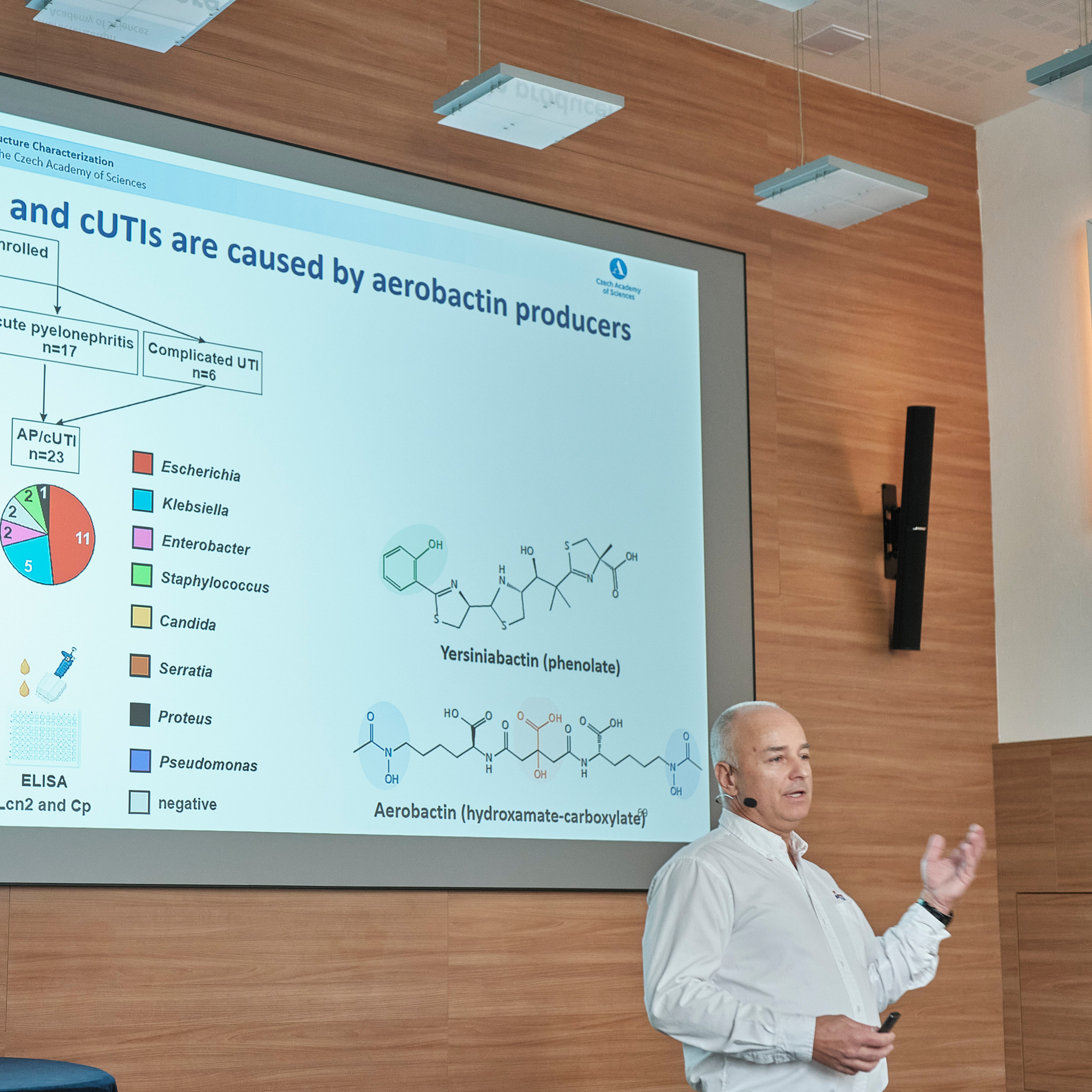
Host-bacterial interactions that occur during urinary tract infections. The
animation illustrates the arsenal of bacteria used to obtain iron, which is
essential for their division, directly at the site of inflammation. This
mixture consists of metallophores, which are substances used by pathogens to
capture metallic ions that are nutritionally important to them. An
immunocompetent host can eliminate only enterobactin (a metallophore) via
the secretion of lipocalin 2 (Lcn2), a host acute-phase protein of
inflammation that suppresses bacterial growth. The host further defends
itself by increasing the secretion of copper ions, which are toxic to
bacteria. Resistant bacterial strains protect themselves against the immune
response by capturing copper ions with the metallophore yersiniabactin or by
secreting metallophores that the host cannot eliminate, such as aerobactin
and yersiniabactin. The complete story:
https://doi.org/10.1021/acsomega.5c05922
Detection of Siderophores as a Superior Noninvasive Diagnostic Tool in Unraveling Mixed Fungal Infections
Two proliferating filamentous fungi are thought to exhibit enhanced
pathogenicity due to their simultaneous production of stealth siderophores,
including rhizoferrin and triacetylfusarinine C. The possible lines of host
defense remain unknown. The complete story:
https://doi.org/10.1021/acsomega.5c01914
Infection Metallomics
FONS Symposium 2020 Czech
Shale energy Extraction
CBS news (2017)
LAB video
Czech version
LAB video
English version
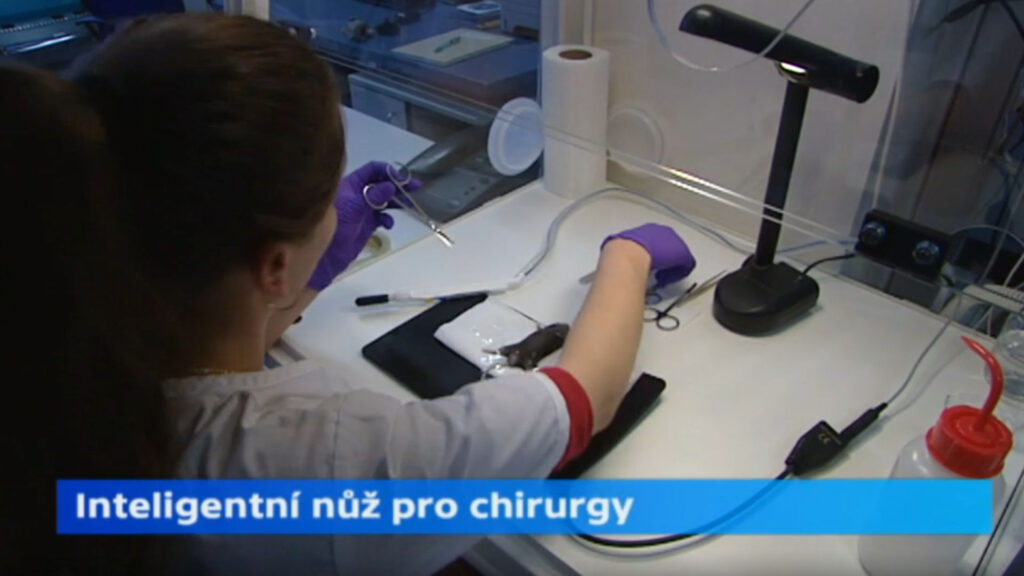
Chytrý skalpel
ČT24 (2016)
TAČR podpora
ČT24 (2016)
Iontová mobilita
AV ČR (2016)
Quo Vadis MS
PřF UK Praha (2013)
Události, komentáře- Bioterorismus
ČT1 (2006)
Na stopě houbové invaze
Herafilm (2005)
Iontový cyklotron
ČT1 (2004)